
Solar & energy
Thermal inspection for solar and energy sites
Radiometric thermal imaging finds failing modules, hot spots, string outages and connection faults across an entire array, in a fraction of the time a ground crew takes.
What we deliver
Findings your O&M team can act on
We fly the DJI Mavic 3 Thermal (RTK) for inspection and the Matrice 4E for mapping. Every anomaly is GPS-located, so crews go straight to the fault.
- Thermal and RGB inspection of modules, strings, combiners and inverters
- An anomaly report with GPS-located findings, ready for your O&M team
- Pre-construction mapping and drainage review data for new sites
- Construction progress mapping for new arrays
- Substation and facility thermal and visual documentation
- Building envelope inspection for heat loss and moisture in roofs and walls
Why fly it: regular thermal checks catch problems before they become failures, with no scaffolding, ladders or shutdowns.
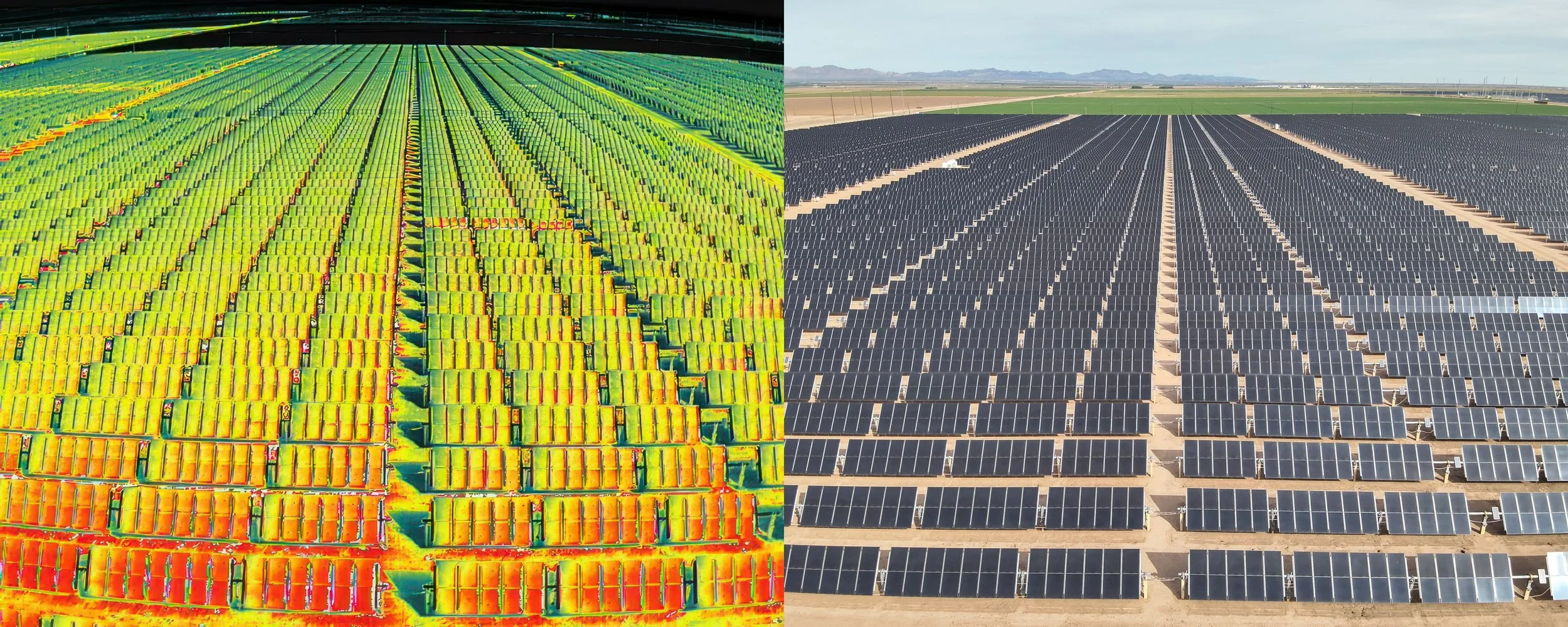
See it in action
Side-by-side radiometric thermal and visible footage from our DJI Mavic 3 Thermal. Hot spots stand out instantly, and every finding in your report is tied to a GPS location.
Side by side thermal sensor and visible RGB drone video
How it works
How a thermal inspection runs
01
Scope
Site size, inverter and string layout, inspection standard and timing for good irradiance.
02
Fly
Radiometric thermal and RGB capture in suitable sun and wind conditions.
03
Analyze
Anomalies classified and located against your array layout.
04
Report
Anomaly report, R-JPEG imagery and map overlays for your O&M team.
Plan your next inspection
Tell us the site, array size and when you need results. We reply with a scope and a quote.